Tuesday, March 29, 2016

Experimental Contemporary Dance and Mixed-media Exhibit by Native Choreographer Rosy Simas


Rosy Simas Danse presents “We Wait In The Darkness”, a story of one Native American family’s struggles through generations of displacement and search for identity, and is a multimedia event that documents the history of a Native American family through the generations that includes traumatic events of Simas’ mother, including the flooding of her ancestral home to make way for the Allegheny reservoir.  Rosy Simas Danse will present, “We Wait In The Darkness” on Saturday, April 9th at 7PM. Admission $10 adults and $5 children. Simas will also conduct residency activities in the area and in neighboring Native American communities associated with her visit.  Ms. Simas’ accompanying historical exhibition will be displayed in The Edge Center Gallery April 8 through April 30.


From the Rosy Simas website (www.rosysimas.com):  “Recent scientific study verifies what many Native people have always known, that traumatic events in our ancestors lives are in our bodies, blood and bones. These events leave molecular scars adhering to our DNA. Our grandmother’s tragic childhood can trigger depression or anxiety in us, but we have the ability to heal these DNA encodings and change that trait for future generations.”


"Rosy Simas, wearing an old-fashioned white dress, dances to the sounds of rushing water and whispering voices. Eyes closed, she steps carefully along an invisible path trod by many before her, including her grandmother Clarinda Jackson Waterman. Simas uses her slowly unraveling movement to reach back into time while still performing in the present..." From http://www.startribune.com/tragic-history-informs-dance-by-rosy-simas/265597851/  


Ms. Simas states: “If time travels in both directions, we can heal the scars of our grandparents’ DNA.”


“We Wait In The Darkness” is an art/dance work created to heal the DNA scars of Simas’ grandmother, her mother, and our ancestors.  It is a journey of displacement and homecoming fueled by the stories of the Seneca women of Simas’ family, particularly her grandmother Clarinda Waterman.”


Within an environment of images and sounds from Seneca lands this new dance work engages past and future, DNA memory, and invisible presences, to create a personal artwork about loss, family, perseverance and home.  This work is created in collaboration with French composer Francois Richomme.


Background of the Seneca People and the KinZua Dam                                  
The Seneca are a group of indigenous Iroquoian-speaking people native to North America who historically lived south of Lake Ontario.  They were the nation located farthest to the west within the Six Nations or Iroquois League in New York before the American Revolution. In the 21st century more than 10,000 Seneca live in the United States in three federally recognized Seneca tribes.  Two are in New York and one in Oklahoma, where their ancestors were relocated from Ohio during Indian Removal. Approximately 1,000 Seneca live in Canada, near Brantford, Ontario, at the Six Nations of the Grand River First Nation. They are descendants of Seneca who resettled there after the American Revolution, as they had been allies of the British and forced to cede much of their lands.


 “The federal government through the Corps of Engineers undertook a major project of a dam for flood control on the Allegheny River.  The proposed project was planned to affect a major portion of Seneca territory in New York.  Begun in 1960, construction of the Kinzua Dam on the Allegheny River forced the relocation of approximately 600 Seneca from 10,000 acres of land which they had occupied under the 1794 Treaty of Canandaigua….The Seneca had protested the plan for the project, filing suit in court and appealing to President John F. Kennedy to halt construction…The Seneca lost their court case, and in 1961, citing the immediate need for flood control, Kennedy denied their request.” Reference: https://en.wikipedia.org/wiki/Seneca_people 


Tuesday, March 22, 2016

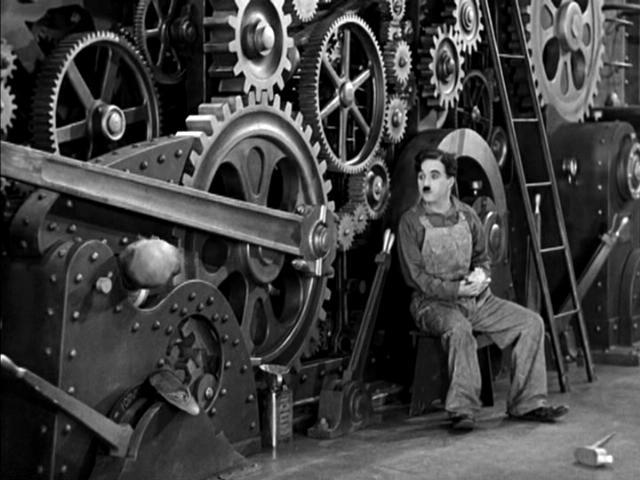
“Modern Times” with Charlie Chaplin at the Edge in Bigfork


The 1936 Charlie Chaplin film, “Modern Times” is often referred to as Chaplin’s greatest movie. It blames the problems of its time, specifically the depression, on the modernization of society and screws the dehumanizing effects of technology with hilarious comedy.  This is a “laugh out loud” sort of movie that will give you a chance to look at what Chaplin thought of the problem that is still an important political issue in 2016.  “Modern Times” will be shown by Jack Nachbar at The Edge Center in Bigfork on April 14th at 6:30PM free of charge. The movie will be accompanied by Jack’s presentation providing a better understanding of the film at the time period of the picture.


This film has a 100% Rotten Tomatoes rating and remains one of Chapin’s most beloved classics. It was supposed to be Chaplin’s first talking movie. By1936, the movie industry had long passed silent movie era. But Chaplin worried that some of the charm and mystique of his beloved character, the “Little Tramp,” would be lost by sound. That seems strange today, but we live in a world totally overwhelmed by sound entertainment. So maybe a trip back to Chaplin’s world might be a good exercise for our “Modern Times.”

Sir Charles Spencer "Charlie" Chaplin KBE  (1889 – 1977) is often referred to as one of the most influential figures in the film industry. Chaplin’s 75 year history with the movie industry served both well. He had Movies in the late Victorian Era well into the 1970s.  
  

It amazing that this creation is so often singled out as his “best”. Sculptures from around the world shown above.  He started life in poverty and ended it in luxury and all of it done with his own hard work. Charlie received an honorary Academy Award “…for his incalculable contribution to the industry,” and has a star on the Hollywood Walk of Fame.
Paulette Goddard (1910 –1990) started out as a child fashion model, and performed in several Broadway plays as a Ziegfeld Girl. Paulette became a Paramount Studio star in the 1940s with a wide array of movies to her credit, but, again, the movie “Modern Times” tops the list of her most famous movies. And it was her first major role in movies.

The critics of the 1930s were very positive with the likes of Frank Nugent of The New York Times  writing…”'Modern Times' has still the same old Charlie, the lovable little fellow whose hands and feet and prankish eyebrows can beat an irresistible tattoo upon an audience's funny bone or hold it still, taut beneath the spell of human tragedy ...”


Also said of “Modern Times”: ”Time has not changed his genius. Variety called it "grand fun and sound entertainment."[7] Film Daily wrote, "Charlie Chaplin has scored on of his greatest triumphs. John Mosher of The New Yorker wrote that Chaplin ‘manufactures some superb laughs ...’  And finally Burns Mantle called the film "another hilariously rowdy success….”

Modern Times was deemed "culturally significant" by the Library of Congress in 1989, and selected for preservation in the United States National Film Registry. Fourteen years later, it was screened "out of competition" at the 2003 Cannes Film Festival.


For such a famous movie to have little or no negative press is a great testament to the movie and a good reason to come and see it on the Big Screen at the Edge Center in Bigfork. You can see this movie free of charge.  Some appropriate snacks will be served courtesy ofJack and his wife/projectionist, Lynn.  Place: The Edge Center for the Arts, Bigfork. Date and time: Thursday April 14th at 6:30PM. It will be worth going out on a chilly Spring evening to a nice warm theater.


Tuesday, February 23, 2016

Henry Fonda in “The Grapes of Wrath” March Classic in Bigfork


.The 1940  film “The Grapes of Wrath” starred a young Henry Fonda and is regarded as one of the best movies set during the 1930’s depression era. The displaced Joads family lose their Oklahoma farm and head west looking for work, opportunities and a new life. The film portrays a part of American history that might have been buried in history books except for effort like this movie based on John Steinbeck’s 1939 novel of the same name. The film was one of the first 25 films selected for preservation in the National Film Registry by the Library of Congress as “culturally, historically, or aesthetically significant.” Ironically, as bad as conditions were for the Joad family, the movie was still banned by Stalin because it showed how even the poorest Americans could afford a car. “The Grapes of Wrath” will be shown by Jack Nachbar at The Edge Center in Bigfork on March 10th at 6:30PM free of charge. The movie will be accompanied by Jack’s presentation providing a better understanding of the film at the time period of the picture.


Life in the “dust bowl” of the central US was challenging to say the least. Years without sufficient rain, combined with farming techniques that caused topsoil to erode in the winds, and bank foreclosures all combined with the 1930’s depression to make families, like the Joads, look for a life that could sustain their bare existence. All they wanted was work for the family and a better life. So they headed west towards California becoming part of a flood of migrant workers. California was supposed to be the land of “plenty,” but going west ended up being into a land of plenty of trouble for the Joads and hundreds of thousands of other people. This is the story of their arduous journey and the adventures and misadventures they encountered.


Three of the stars in this film were Henery Fonda as Tom Joad, Jane Darwell as Ma Joad,  and John Carradine as Jim Casy. The movie was nominated for seven Academy Awards and won two for Best Supporting Actress by Jane Darwell and Best Director by John Ford. It was received very well by the critics of the time. Bosley Crowther, a New York Times critic of the period, when retiring, called it one of the best ever films ever made.


Henry Fonda loved his role as Tom Joad. He kept the hat he used in this movie for the rest of his life. Before he died, he passed it on to Jane Withers, who, as an 8 year old little girl, help Hank with stage fright with a little prayer before he went on stage.


Henry Jaynes “Hank” Fonda (1905 – 1982) was an American film and stage actor with a career spanning more than five decades. His numerous acting awards included an Oscar for best actor in “On Golden Pond." Through his more than half century in the industry Fonda had roles spanning comedy, drama, and some darker epics. Even with his almost six decades in the business, he still holds the record between Oscar nominations with this movie in 1940 and his last movie “On Golden Pond” in 1981.


Jane Darwell (1879 – 1967) had appearances in more than one hundred movies over her fifty year plus career, but is still best known for her portrayal as Ma Joad, the matriarch of the family.


John Ford could not embarrass or upset John Caradine and it is said it was a real irritation to Ford. Apparently the reason was simply that Carradine had a huge ego and considered himself a great actor and was not effected by anything the director hit him with.


 One Critic’s Opinion About the Movie

If you still need a little more coaxing to come out on a winter’s night to see this movie, consider what another critic said about the movie. A noted Time magazine editor said, while separating the movie from the novel, (which he did not particularly like) “But people who go to pictures for the sake of seeing pictures will see a great one. For The Grapes of Wrath is possibly the best picture ever made from a so-so book...Camera craft purged the picture of the editorial rash that blotched the Steinbeck book. It is the saga of an authentic U.S. farming family who lose their land. They wander, they suffer, but they endure. They are never quite defeated, and their survival is itself a triumph.”


So if you would like to see a 1940 drama classic come and see “The Grapes of Wrath” on the “Big Screen ” of the Edge Center in Bigfork. You can see this movie free of charge.  Some appropriate snacks will be served courtesy of Jack and his wife/projectionist, Lynn.  Place: The Edge Center for the Arts, Bigfork. Date and time: Thursday March 10th at 6:30PM. It will be worth going out in the cold to a nice warm theater.


Sunday, January 31, 2016

Having a “Picnic” in Bigfork in February Could be a Bit Chilly


The romantic comedy film “Picnic,” made in 1955, just might warm you up a bit in the below zero weather outside. If you are in Northern Minnesota, it is certainly after the end of summer around here and that white stuff on the ground would be cold enough let alone the minus zero temperatures. But there will be some hot stuff going “on screen” for this movie classic. “Picnic” is about an outsider showing up in town and in 24 hours managing to shake-up everything considered “normal” for a lot of people. It seems like everyone he encounters gets his or her normal lives turned up-side-down for the better or worse.  “Picnic” will be shown by Jack Nachbar at The Edge Center in Bigfork on February 11th at 6:30PM free of charge. The movie will be accompanied by Jack’s presentation providing a better understanding of the film at the time period of the picture.


At 37 years old William Holden was considered too old for the part, but he was happy to end his contract with Colombia Pictures with such a great part and, in lots of movie goers opinions he showed the doubters that he was not too old (even if he had to shave his chest to look more youthful). While Holden was getting a bit old for such parts, this was an early film for Kim Novak and is considered her breakout movie by many. The movie garnered six Oscar award nominations and won two. It’s number 59 in AFI’s “100 years…100 passions” list, and even won the prestigious Grand Prix Award of the Belgian Critics association.  Not bad for a movie that even had real tornadoes and torrential rains stopping on-location work.


Another “star” of the film was music. "Theme From Picnic" reached number one on the 1956 Billboard charts and was number 14 overall that year. It was composed by George Duning  with original lyrics  by Steve Allen. The song is featured in a dance scene between Holden and Novak where it was blended with the 1930’s standard “Moon Glow”. Other artists often later paired the two songs after the movie was made, and even the film soundtrack album was on the Billboard charts.


And speaking of dancing, Holden was so nervous about dancing with Novak that he reportedly went to Kansas roadhouses and practiced  steps in front of jukeboxes with choreographer Miriam Nelson. Above photos www.twincities.com


William Holden (1918 –1981) was one of the biggest box office draws of the 50’s through the 70’s. He won Oscars for best actor in “Stalog 17” and a prime time Emmy for his role in the 1973 TV film “Blue Knight.”   He had over 70 feature films to his credit plus numerous other awards including being 25th on AFI’s list of 25 greatest male stars of Classic Hollywood Cinema. Reference: http://www.tcm.com/tcmdb/person/87865%7C155797/William-Holden/filmography.html


Holden had roles with some of the greatest leading ladies of the era, but, in this writer’s opinion, none were more beautiful than Kim Novak. “Picnic” was at the beginning of her career and showed her at her best. Photo below thefilmexperience.net


Kim Novak asked director Joshua Logan to pinch her black and blue off screen, telling him, "I can only cry when I'm hurt." That must be an early example of serious method acting. We really don’t know if he did and she did or if it was all Hollywood hype, but it certainly sounds believable. Reference: http://www.imdb.com/title/tt0048491/trivia


Born Marilyn Pauline in 1933, Kim Novak did not have a long film career, but in that career she played opposite some of the top leading men of the era. Her career began in 1954 when she signed up with Columbia Pictures, and “Picnic” was her fourth film with them. It is hard to judge her acting abilities or staying power in Hollywood because she backed away from her career 1966 after a period of “not so great” films. She technically retired, but has appeared sporadically in film and TV work. Reference: https://en.wikipedia.org/wiki/Kim_Novak


The studio wanted to promote Rosalind Russell for an Oscar in “Picnic,” but she refused because it would have been in the best supporting category and not the star. Many felt she would have won that Oscar. Photo below www.pinterest.com


Rosalind Russell (1907 –1976) was an actress that had a fabulous forty year career. She won all five Golden Globes for which she was nominated.  That was the most ever until Meryl Streep won her sixth Globe in 2007. Rosalind won a Tony Award for a Broadway Musical, and was nominated for an Oscar four times.

So if you would like to see one of 1956’s top box office attractions that earned the studio a huge $6.3 million (that was huge in 1955) come and see “Picnic” on the “Big Screen ” of the Edge Center in Bigfork. You can see this movie free of charge.  Some appropriate snacks will be served courtesy of Jack and his wife/projectionist, Lynn.  Place: The Edge Center for the Arts, Bigfork. Date and time: Thursday February 11th at 6:30PM. It will be worth going out in the cold to a nice warm theater.


Thursday, December 31, 2015

“The Man Who Would be King” Could Have Been a 50s’ Classic


It is surprising how many times “The Man Who Would Be King”, a 1975 movie classic, “almost” did NOT get made. It is a late career classic for director, John Huston, who had been trying since the 50s' to get it done, but things like his hand picked stars, Bogart and Gable, dying before the project could get going. Then other complications including the challenge of financing kept it on the shelf.  It is fortunate for moviegoers that he persisted, because it is a great movie, with a strong story line and wonderful cast of actors. “The Man Who Would be King” will be Shown by Jack Nachbar at The Edge Center in Bigfork on January 14th at 6:30PM free of charge. The movie will be accompanied by Jack’s presentation providing a better understanding of the film at the time period of the picture.


The movie, based on Rudyard Kipling's 1888 novella, is about two adventurous British soldiers who left military service to find adventure, and eventually ended up in Kafiristan a remote part Afghanistan. For John Houston to work so many years to get this film done, it must have been very special to him. He knew a good story and this is exactly what the movie gives you. It is a "rip roaring" adventure in a part of the world, at that time, never having seen a white man since Alexander the Great. Starring Sean Connery, Michael Caine, Saeed Jaffrey, and Christopher Plummer who acts as Kipling the anonymous narrator of the movie. The movie was nominated for four Academy Awards, won a Golden Globe for best original score, and a BAFTA Award. Reference: https://en.wikipedia.org/wiki/The_Man_Who_Would_Be_King_(film)


Born John Marcellus Huston (1906 – 1987) John was an actor and screen writer. Huston, however, is best known as a film director. He actually wrote the screenplays for some 37 films and many are considered as classics. With an artist’s touch and sense of beauty based on his early work as a painter, he was able to “sense” the greatness of a film before it was made. He had a 46-year career during which he received 15 Oscar nominations winning twice. Often his movies depicted the hero on a quest towards greatness, and often those stories came from classic literature. Reference: https://en.wikipedia.org/wiki/John_Huston 


Sir Thomas Sean Connery  (August 1930) will forever be known for his James Bond Roles, but he did many other wonderful works that will remain an important part of film history. His part in “The Man Who Would Be King” is the primary starring role. Both he and Caine may be English Knights, but in this movie, Connery takes the lead. During Sean’s career he won an academy award, two BAFTA Awards and three Golden Globe Awards. He was Knighted by Elizabeth II in 2000 and received the Kennedy Center Honors in the US. None of this has anything to do with this film, but you need to keep mind the quality of this actor’s work and professional reputation as background. Sean has played so many epic characters and made so many common ones look epic it is hard to find ones in between. Reference: https://en.wikipedia.org/wiki/Sean_Connery


After some time shooting this movie, both Micheal and Sean were concerned that there was no feedback from Houston about their performance, so “…Caine approached Huston and asked if anything was wrong and if he was happy with their performances? Huston replied: " You're getting paid a lot of money to do this Micheal, I think you should do it by yourself". Reference: http://www.imdb.com/title/tt0073341/trivia


Sir Michael Caine, born Maurice Joseph Micklewhite; (March 1933), is the other Knighted actor in this movie. He is a British film superstar with a pronounced English accent. He has appeared in over 115 films. Like Connery, you can list the dozens of great movies films that Caine has been in. So why this movie? I think he got the role because of his credentials and English accent. The two actors played their parts wonderfully. There were other actors considered for the role, of course, but the team of Connery and Caine really fit well with the story. In his career, he was nominated for six Oscars and won two (not for this movie). He earned two BAFTA awards and a Golden Globe Award for best actor in his career. Caine is one of only two actors nominated for an Academy Award for acting in every decade from the 1960s to 2000s. His Knighthood came in 2000 from Elizabeth II. https://en.wikipedia.org/wiki/Michael_Caine


One character in the movie was his first ever acting role. It was Karroom Ben Bouih, who played the high priest Kafu-Selim. He was 103 years old. It is said that when he saw some of the footage, he declared that now he would live on forever. Housten found hm guarding an Olive grove at night one evening and thought he would be perfect for the part. After a few days of work, Houston noticed that Karroom was falling asleep during work. It turned out Karrom was still working the night job. Houston told him he no longer needed a second job and his pay would be enough for his needs. Reference: http://www.imdb.com/title/tt0073341/trivia


Rotten Tomatoes gives this movie a very high rating of 96%. A review of the movie in the New York York Times by Vincent Canby says…"The Man Who Would Be King" manages to be great fun in itself while being most faithful to Kipling, whose story, written in the 1890's, is a kind of raffish metaphor for the British colonial experience that did not end for another half century.” Reference: http://www.nytimes.com/movie/review?res=9E04E5D91E30E337A2575BC1A9649D946490D6CF and http://www.rottentomatoes.com/m/man_who_would_be_king/


Come and see what this reviewer is praising so highly on the “Big Screen ” of the Edge Center in Bigfork. You can see this movie free of charge.  Some appropriate snacks will be served courtesy of Jack and his wife/projectionist, Lynn.  Place: The Edge Center for the Arts, Bigfork. Date and time: Thursday January 14th at 6:30PM. It will be worth going out in the cold to a nice warm theater.